Creator Guide
How Master Royalties Work: Earning From Your Sound Recordings
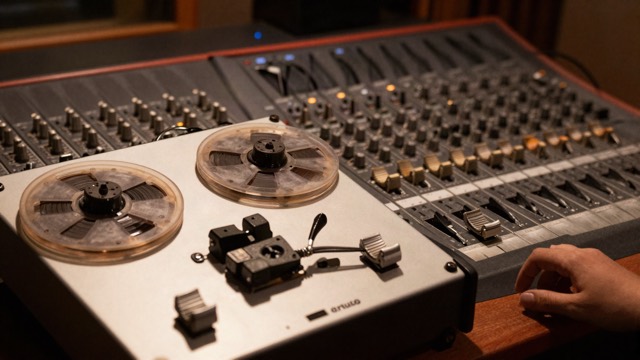
A "master" is the original sound recording of a song: the finished audio that gets streamed, downloaded, pressed and broadcast. Whoever owns or controls the master collects the recording side of the income, which for most modern releases is the largest share of streaming revenue.
This guide explains who owns masters, how master royalties reach artists under different kinds of deal, what recoupment does to your statements, and where neighbouring rights fit in.
What a master is, and who owns it
The master is a separate copyright from the composition (the song as written). The composition belongs to the songwriters and publishers; the master belongs to whoever made or financed the recording, subject to contracts. The two are explained side by side in how music royalties work.
Common ownership scenarios include:
- Independent artist: the artist pays for the recording and owns the master outright, sometimes sharing it with collaborators by agreement.
- Traditional record deal: the label funds the recording and usually owns the master, often for the full copyright term, paying the artist a royalty.
- Licence deal: the artist owns the master but licenses it to a label for a fixed period and territory.
- Joint venture or profit-split deal: the label and artist share ownership or profits, often 50/50 after costs.
Where master income comes from
| Source | How it is paid |
|---|---|
| On-demand streaming (Spotify, Apple Music, Boomplay, Audiomack and others) | Platform pays the label or distributor from a revenue pool |
| Downloads and physical sales | Store or distributor pays the label or artist after its margin |
| YouTube and user-generated video | Ad revenue shares and Content ID claims, via distributor or label |
| Sync (master use licence) | Negotiated fee paid to the master owner |
| Neighbouring rights | Collecting societies pay master owners and performers for broadcast and public performance |
Streaming services usually pay considerably more to the master side than to the publishing side for each stream, which is why master ownership matters so much. See how Spotify royalties work for how the pool is divided.
How deals change what reaches the artist
Distribution deals
With a distributor, the artist usually keeps ownership and receives most of the income: some distributors charge an annual fee and pass on close to 100% of royalties, while others keep a percentage, commonly somewhere between 10% and 30%. Some also offer advances in exchange for a larger share for a period. Read more in how to distribute music.
Traditional record deals
A label pays an advance and covers recording, marketing and other costs. In return, the artist receives a royalty, historically often in the range of about 15% to 25% of the label's receipts or a base price, depending on the deal and era. The artist's royalties are used to recoup the advance and recoupable costs before any further money is paid.
Profit-split and licence deals
Many modern deals share net profits after costs, for example 50/50 or better for the artist, and some licence deals return masters to the artist after a set term. These can be attractive but depend on how "costs" are defined.
Recoupment explained with numbers
Recoupment is the process of a label recovering advances and recoupable costs from the artist's royalties. It is not a loan that the artist repays out of pocket in most deals, but no royalties are paid until it is complete. These numbers are illustrative only.
An artist signs for a $50,000 advance with an 18% royalty. Recoupable recording and video costs are another $30,000, so $80,000 must be recouped.
The label earns $300,000 from the album's master income in year one.
Artist royalty: 18% × $300,000 = $54,000 credited to the artist's account.
Unrecouped balance: $80,000 − $54,000 = $26,000 still owed → the artist receives no further royalties yet.
Year two: another $200,000 of label income → $36,000 credited.
$36,000 − $26,000 = $10,000 paid to the artist.
Meanwhile, the label has kept most of the $500,000. That does not automatically make a deal unfair, because the label took on the risk and spent money on marketing, but it shows why comparing deals carefully matters. The record deal calculator lets you model advances, royalty rates and recoupment.
Sharing the master between collaborators
Independent releases often have several people with a stake in the master: a producer on points, a featured artist, or band members who co-funded the recording. Common approaches include:
- Percentage of net receipts paid by the master owner to each participant.
- Co-ownership of the master itself, with agreed percentages.
- Distributor split payments, where the distributor pays collaborators automatically according to percentages you set.
Whatever the method, write it down. See how to split song ownership and how producers get paid, and use the music split calculator to check the numbers.
Neighbouring rights: the often-forgotten master income
When a recording is broadcast on radio or TV or played in public spaces, many countries pay "neighbouring rights" (related rights) royalties to the master owner and to the performers on the recording. This is separate from the songwriters' performance royalties. Examples of collecting bodies include:
- UK: PPL, for master rights holders and performers.
- US: SoundExchange, for digital non-interactive performance such as satellite and internet radio. There is no general performance right for recordings on US AM/FM radio.
- Canada: Re:Sound.
Performers, including session musicians and featured vocalists, can often claim a performer share even if they do not own the master. Check which body covers your territory and register both your recordings and your performances.
Questions to ask before giving up master rights
- Who will own the masters, and for how long? Is there a reversion date?
- What exactly is recoupable: recording, videos, marketing, tour support?
- Is the royalty calculated on gross receipts, net receipts or a base price, and what deductions apply?
- Can you release music elsewhere, and are side projects or features restricted?
- How often will you receive statements, and do you have the right to audit them?
Checklist: protecting your master income
- Know exactly who owns each master you appear on, and get it in writing.
- Make sure every recording has its own ISRC and consistent metadata.
- Understand your distributor's fees, or your label's royalty rate, and what is recoupable.
- Register with the relevant neighbouring rights society as a rights holder and/or performer.
- Check that YouTube Content ID is set up for your recordings.
- Look for reversion or term clauses that might return your masters to you.
- Estimate income realistically with the streaming earnings calculator before making financial plans.
Key takeaways
- The master is the recording, a separate copyright from the song.
- Master owners usually collect the largest share of streaming income.
- Distribution deals keep ownership with the artist; traditional deals trade ownership for funding and a royalty.
- Recoupment means no royalties are paid until advances and recoupable costs are covered.
- Neighbouring rights pay master owners and performers for broadcast and public performance in many countries.
Not legal or financial advice. Royalty rates and deal terms vary widely. Always check your own contracts and have a qualified music lawyer review any record or distribution deal before signing.