Amapiano
What Is Amapiano? A Guide to South Africa’s Log-Drum Sound
Amapiano is a South African style of house-derived dance music built around warm piano chords, loping percussion and a distinctive, pitch-bending bass sound known as the log drum. It grew out of township parties in the mid-2010s and has since become one of the most influential sounds in global pop. This guide explains what it sounds like, where it came from and how producers make it.
The short answer
Amapiano (the name is usually translated from isiZulu as “the pianos”) is a style of electronic dance music from South Africa. It combines the steady structure of house music with elements of jazz, soul and kwaito — the slowed-down, vocal-led house style that dominated South African townships in the 1990s. What sets amapiano apart is its bass: a percussive, wooden-sounding synth that slides between notes and carries both the rhythm and the melody. Listeners and producers call it the log drum.
The typical amapiano track is patient. It sits at a relaxed tempo, loops its core ideas for a long time, and adds or removes small percussive details to keep the groove moving. Vocals, where there are any, tend to be chanted, half-spoken or sung in short phrases rather than delivered as traditional verses and choruses.
Where amapiano came from
Amapiano emerged in South African townships, particularly around Gauteng province (which includes Johannesburg and Pretoria), in the mid-2010s. It developed through parties, local DJs and informal sharing of tracks on messaging apps and download sites rather than through major labels, which is part of why its early history is hard to date precisely and why several areas are often credited with shaping it.
The genre drew on a long line of South African dance music. Kwaito gave it a relaxed tempo and an emphasis on groove over drops. Deep house, hugely popular in South Africa, gave it its four-to-the-floor foundation and lush chords. Bacardi, a Pretoria-based dance style, contributed some of its percussion ideas. Jazz and soul lent it the extended chords that give amapiano its lounge-like warmth.
By the late 2010s amapiano had become the dominant party sound in South Africa. Its spread was accelerated by social media, where dance challenges and short clips built around its grooves travelled quickly, and by the sharing of mixes online during the period when clubs were closed in 2020.
What amapiano sounds like
The log drum
The log drum is the genre’s fingerprint. It is a short, punchy bass sound with a clear attack and a slightly hollow, knocking tone, often pitched so that it can play melodic figures. Producers frequently bend its pitch or slide between notes, so it seems to “talk”. Unlike a sub-bass that hums underneath everything, the log drum is played rhythmically and sits in the foreground, answering the kick drum and the chords. It is usually programmed rather than played, using a synth patch designed or tweaked for that tone.
Tempo and groove
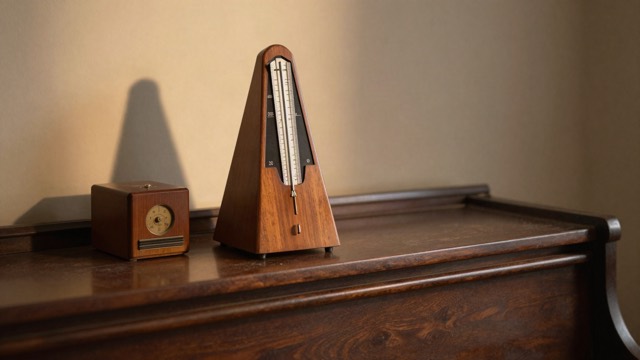
Amapiano tempos commonly sit somewhere around 108 to 115 BPM, slower than much club house. Because the percussion is busy and syncopated, the music often feels half-time and floating rather than driving. If you are measuring tracks for a DJ set, our BPM tap calculator helps you find the exact tempo, and our guide to what BPM means explains why half-time and double-time readings can both look correct.
Chords and keys
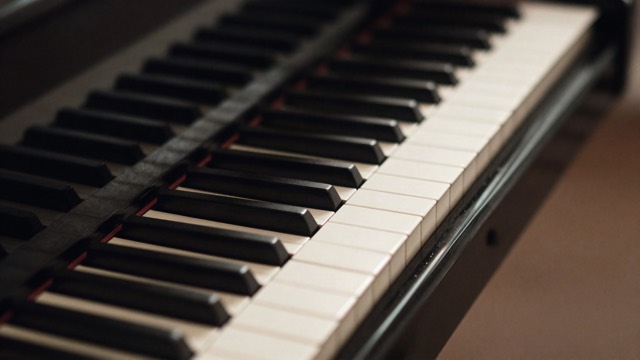
The “piano” in amapiano is real: jazzy electric-piano and piano chords, often seventh and ninth chords, give the music its mellow, late-night character. Progressions are usually short and repeated, so the harmonic mood stays steady while rhythms change around it. If you are building your own, our chord progression generator can suggest loop-friendly progressions, and our explainer on how song keys work covers the theory behind them.
Percussion and space
Shakers, rim shots, congas and light hand percussion fill the gaps between the kick and the log drum. Producers also use a lot of space: filtered breakdowns, long intros and sections where almost everything drops out except a single bassline. That patience is part of the appeal — the groove builds tension slowly rather than through a sudden drop.
Vocals
Amapiano vocals are often chanted, repeated or used almost as another percussion layer. Many tracks feature short phrases in isiZulu, Sesotho, Setswana or other South African languages, sometimes mixed with English. Longer, sung vocals became more common as the style moved towards pop.
Listening tip: On your next amapiano track, try following only the log drum for a full minute. Notice how rarely it plays the same pattern twice in a row, and how the kick drum stays steady beneath it. That interplay is the heart of the style.
Sub-styles and developments
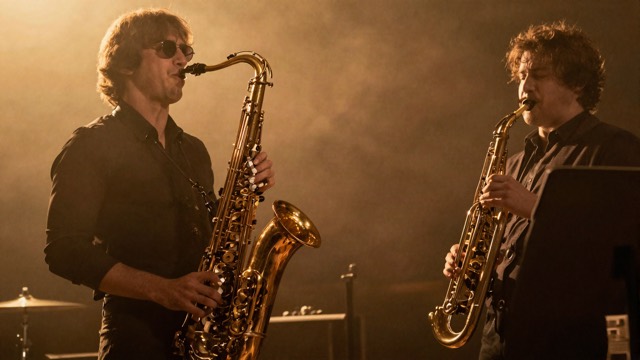
As amapiano matured, producers split into recognisable strands. Some favour a softer, more musical approach with prominent keys, jazz chords and saxophone or vocal solos, sometimes described as “private school” or soulful amapiano. Others push harder, grittier log drums and minimal arrangements aimed squarely at the dancefloor. There is also a clear pop strand, where songs are shorter, vocals are front and centre, and structures follow verse-chorus patterns.
These labels are loose and used differently by different fans. What unites them is the log drum, the steady four-to-the-floor pulse and the unhurried pacing.
How amapiano spread beyond South Africa
Amapiano’s influence outside South Africa has been striking. In Nigeria, producers and singers began folding log drums into Afrobeats and street-pop at the start of the 2020s. Asake is the most prominent example: his records pair amapiano-style bass with fuji-influenced chants and choir-like backing vocals, and they helped make the log drum a familiar sound across West Africa.
In pop, Tyla showed how amapiano textures could anchor radio-length songs. Her 2023 single “Water” won the first Grammy for Best African Music Performance in 2024, drawing international attention to the sound. We trace that wider story in our feature on how African pop went global.
Amapiano DJs and producers now tour widely, and amapiano nights are common in cities with large African diasporas, such as London and Toronto, as well as in Lagos and Accra.
How producers make an amapiano track
There is no single recipe, but many tracks are built in a similar order:
- Set the tempo. Pick something in the typical range, often around 110–113 BPM.
- Lay down the pulse. A soft four-to-the-floor kick, with hi-hats and shakers adding off-beat movement.
- Write the chords. A two- to four-chord loop on piano or electric piano, usually with extended chords.
- Programme the log drum. A syncopated bass pattern, often with pitch slides, that answers the kick rather than doubling it.
- Add percussion detail. Congas, rim shots and small fills that change every few bars.
- Arrange for patience. Long intros and outros for DJs, filtered breakdowns and gradual additions rather than sudden drops.
Arrangements often run longer than a typical pop song, which matters when you are planning a release. Our song duration calculator and song structure planner help you map sections and runtimes, whether you want an extended club version or a shorter radio edit.
Common misconceptions
- “Amapiano is just Afrobeats.” They overlap and influence each other, but amapiano is South African and rooted in house music, while Afrobeats is West African pop. Our explainer on Afrobeats and Afrobeat covers the West African side.
- “It is always slow.” Tempos are moderate rather than slow; the busy percussion makes it feel relaxed, not sluggish.
- “The log drum is an acoustic instrument.” Despite the name, it is usually a synthesised bass sound.
Where to go next
If you are new to the genre, start with a long DJ mix to hear how tracks flow into one another, then work backwards to individual producers. For pop-leaning entry points, try Tyla; for the Nigerian crossover, Asake. Browse more on our amapiano and African music pages.