Afrobeats
Afrobeats vs Afrobeat: What Is the Difference?
Afrobeat and Afrobeats sound almost identical when you say them aloud, and they share Nigerian roots. But they describe different music from different eras, built for different purposes. Here is how to tell them apart — and why the connection between them still matters.
The quick version
| Afrobeat | Afrobeats | |
|---|---|---|
| Era | Late 1960s and 1970s onwards | 2000s and 2010s onwards |
| Best-known pioneer | Fela Kuti, with drummer Tony Allen | A broad wave of Nigerian and Ghanaian pop artists |
| Core instruments | Live band: drums, bass, interlocking guitars, keyboards, horns, percussion | Programmed drums, synths, bass, vocals; live instruments optional |
| Typical track length | Often ten minutes or more | Usually around two to four minutes |
| Main purpose | Extended grooves, often carrying political messages | Pop songs for radio, clubs, parties and streaming |
| Musical influences | Highlife, jazz, funk, Yoruba music | Hip-hop, R&B, dancehall, highlife, house, and Afrobeat itself |
What Afrobeat is
Afrobeat (singular, no “s”) is a genre developed in Nigeria by Fela Kuti and his bands in the late 1960s and 1970s. Fela combined the highlife he grew up with, the jazz he studied, the funk and soul of American artists he encountered, and Yoruba rhythmic traditions into long, hypnotic, horn-heavy compositions. Drummer Tony Allen, who played with Fela through the 1970s, is widely credited with shaping Afrobeat’s signature rhythm.
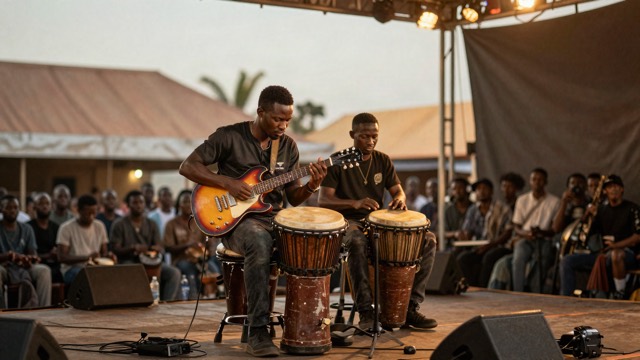
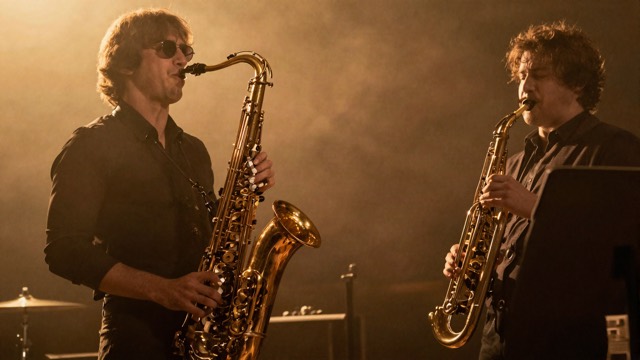
Afrobeat is band music. A typical arrangement includes a drum kit playing intricate, layered patterns; a bassline that repeats with small variations; two or more guitars playing short, interlocking parts (one often in a high, scratchy rhythm); keyboards; a horn section of saxophones and trumpets; and hand percussion such as shekere and congas. The music builds slowly: a long instrumental introduction, horn riffs, solos, and eventually vocals — frequently in a call-and-response between the lead singer and backing vocalists.
Fela used Afrobeat as a vehicle for fierce political commentary, criticising corruption, military government and the legacy of colonialism. That combination of groove and message is central to the genre’s identity, and Fela’s influence can be heard in jazz, funk and hip-hop around the world.
What Afrobeats is
Afrobeats (plural, with an “s”) is a broad umbrella term for the contemporary pop music of West Africa, particularly Nigeria and Ghana, that developed through the 2000s and exploded internationally in the 2010s. The term became especially common in the UK, where DJs and fans used it to describe the new wave of African pop filling clubs and radio.
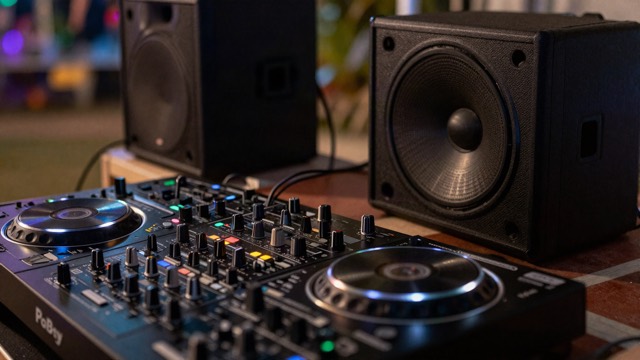
Afrobeats is less a single style than a family of sounds. It draws on hip-hop, R&B, dancehall, highlife, Afrobeat, and — more recently — South African amapiano. Most tracks are built in digital audio workstations around programmed drums and synths, with vocals in English, Nigerian Pidgin, Yoruba, Igbo, Twi and other languages. Songs are compact, hook-driven and designed to work on the dancefloor and on streaming playlists.
Some artists and critics dislike “Afrobeats” as a label, arguing that it lumps together very different music from many countries. You will see it used loosely, and you will also see more specific terms such as Afropop, Afro-fusion, street-pop and alté.
How they sound different
Rhythm
Afrobeat rhythms are played live and are dense: the drummer layers patterns across the kit so that the groove feels constantly in motion, while percussion and guitars add further interlocking parts. Afrobeats rhythms are usually programmed. Many tracks use a syncopated, bouncing drum pattern with a prominent snare or clap and shaker loops, and some borrow the dancehall-influenced swing of Caribbean music. Amapiano-influenced Afrobeats swaps in log-drum bass — see our guide What is amapiano?
Tempo
Both styles often sit in a moderate tempo range, but Afrobeats has a wide spread: mid-tempo love songs, bouncier dance records and slower R&B-leaning tracks. If you want to compare specific songs, our BPM tap calculator lets you tap along and measure the tempo in seconds.
Length and structure
This is often the quickest giveaway. Afrobeat tracks frequently run beyond ten minutes, with long instrumental passages. Afrobeats songs follow pop structures — intro, verse, chorus, verse, chorus, perhaps a bridge — and rarely run much beyond four minutes. Our song structure planner is a handy way to see how those sections add up.
Vocals and message
Afrobeat vocals often arrive late in a track and carry pointed social commentary. Afrobeats vocals are central from the first bars and usually focus on love, celebration, ambition, success and self-expression, though many artists also address social issues.
Why the confusion happens
The names are nearly identical, both styles are Nigerian at root, and the international media has not always been careful. Some press coverage of Afrobeats artists has called them “Afrobeat” musicians, and some streaming playlists mix the two. The similarity is not accidental either: the name “Afrobeats” nods to Fela’s legacy, and several contemporary artists openly draw on it.
Where the two meet
The clearest bridge between the two is Burna Boy, whose records often feature brass arrangements, call-and-response backing vocals and Afrobeat-style grooves inside otherwise contemporary productions. Listen for horn stabs and extended grooves on his albums and you will hear Fela’s influence running through a modern Afrobeats record.
Street-pop artists such as Asake draw on a different older tradition — the Yoruba percussion music fuji — alongside amapiano, which shows how Afrobeats constantly absorbs local and neighbouring sounds. Meanwhile, the melodic guitar lines found in many Afrobeats and Ghanaian records trace back to highlife, which also shaped Fela’s early music; our listener’s guide to highlife explains that shared ancestor.
Rule of thumb: if it features a full live band with horns, stretches past ten minutes and carries a political message, it is probably Afrobeat. If it is a three-minute, hook-led pop song made for playlists and parties, it is almost certainly Afrobeats.
Why the distinction matters
For listeners, knowing the difference opens up two rich catalogues rather than one blurred one. For artists and marketers, it matters for accuracy: tagging a contemporary pop single as “Afrobeat” on a distributor or playlist pitch can send it to the wrong audience. If you are releasing music, our guides to distributing music and promoting an Afrobeats song cover genre tagging and pitching in more detail.
Further listening
For classic Afrobeat, explore Fela Kuti’s 1970s albums and Tony Allen’s drumming. For modern Afrobeats, start with our profiles of Burna Boy, Wizkid and Asake, and browse the Afrobeats section for more features and reviews.