How this tool works
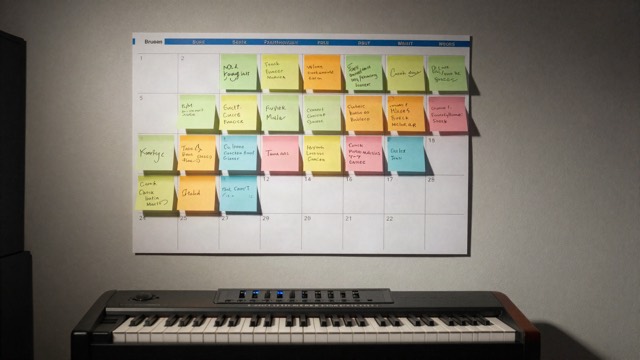
A release goes more smoothly when you plan backwards from the date fans will hear it. The planner takes your release day and subtracts a lead time for each milestone. Lead times grow with the size of the project, because an EP or album has more tracks to finish, more assets to prepare and a longer story to tell:
| Milestone | Single | EP | Album |
|---|---|---|---|
| Masters finished | 6 weeks before | 8 weeks | 12 weeks |
| Artwork and assets ready | 5 weeks | 7 weeks | 10 weeks |
| Press and blog outreach begins | 4 weeks | 6 weeks | 8 weeks |
| Submit to distributor | 4 weeks | 5 weeks | 6 weeks |
| Announce / social campaign | 3 weeks | 4 weeks | 6 weeks |
| Editorial playlist pitch | 3 weeks | 4 weeks | 4 weeks |
| Pre-save campaign | 3 weeks | 4 weeks | 5 weeks |
| Teaser content | 2 weeks | 2 weeks | 3 weeks |
| Post-release promotion | 4 weeks after | 6 weeks after | 8 weeks after |
These are our editorial suggestions based on common independent-release practice, with a buffer built in. They are not rules set by any platform. Dates are calculated as plain calendar days in your own time zone, so they won’t drift by a day around clock changes.
Distribution is the step with the most real-world variation. Distributors publish their own recommended delivery times, and submitting early also gives you time to fix rejected metadata and to have the release appear in Spotify for Artists before you pitch. Our guide to how to distribute music covers that process.
How to use this tool
- Pick your release date. The planner suggests a Friday about eight weeks away as a starting point.
- Add a title if you like — it appears in the copied plan and calendar events.
- Choose Single, EP or Album.
- Press Build my plan and read the timeline. Greyed-out items marked “has passed” are dates already behind you.
- If key steps have already passed, try a later release date and rebuild.
- Press Download .ics calendar file and open it to add all-day reminders to your calendar, or copy the plan as text to share with your team.
Example calculation
You plan a single for Friday 13 November 2026 and build the plan on 18 September 2026 (56 days before release):
| Date | Milestone |
|---|---|
| Fri 2 Oct | Masters finished |
| Fri 9 Oct | Artwork and assets ready |
| Fri 16 Oct | Submit to distributor · start press outreach |
| Fri 23 Oct | Announce · launch pre-save · pitch to editorial playlists |
| Fri 30 Oct | Teaser content goes out |
| Fri 13 Nov | Release day |
| Sat 14 Nov – Fri 11 Dec | Post-release promotion |
Change the type to Album and masters move to 21 August — which has already passed on 18 September, so the planner would warn you and suggest a later date.
What does this result mean?
Each milestone is a target date, not a deadline set by a platform. The order matters more than the exact day: finished audio and artwork come before distribution, distribution comes before pitching and pre-saves, and teasers build towards release day.
Playlist pitching: Spotify for Artists lets you pitch one unreleased song to its editors once the release appears in your dashboard, and asks that you do it at least a week before release. Earlier is better — it gives editors more time to listen, and a pitch submitted in time also helps your release reach followers’ Release Radar. The planner places the pitch several weeks out for that reason. Other services have their own processes, usually via your distributor.
Friday releases: new music is released worldwide on Fridays, so charts, editorial playlists and release-week coverage tend to be built around that day. If you pick another weekday the planner mentions it, but there can be good reasons to go against the grain, such as avoiding a crowded Friday.
Warnings appear if your release date has passed, is less than two weeks away, or if suggested steps are already behind you. A tight timeline can work if everything is ready, but it leaves little room for pitching and promotion. For the bigger picture, read how to plan a music release and, for Afrobeats artists, how to promote an Afrobeats song.
Getting the most from your rollout
- Lock metadata early. Artist name spelling, featured artists, songwriter and producer credits, ISRCs and explicit-content flags are much harder to fix after release.
- Agree splits before release. Settle who owns what with co-writers and producers before the music goes out — see how songwriting splits work and the Music Split Calculator.
- Batch your content. Film clips, visualisers and behind-the-scenes footage in one or two sessions before the announcement so posting doesn’t stall.
- Plan the second month. Many releases fade because promotion stops on release day. Keep a list of follow-up content — a remix, acoustic version, live clip or dance challenge.
- Singles vs projects. Unsure which format suits you now? Read album vs EP vs single.
Important limitations
- Suggestions, not requirements. No platform or distributor requires this exact schedule. Always check your own distributor’s delivery guidance and any label or funding deadlines.
- Platform rules change. Pitching and pre-save features and their timing can change; check current guidance in Spotify for Artists, Apple Music for Artists and your distributor’s help pages.
- No weekend or holiday awareness. Milestones can land on weekends or public holidays. Shift them to suit your team.
- One-size lead times. A self-produced single with finished artwork needs less time than an album with features, clearances and a video. Adjust as needed.
- Calendar files are local. The .ics file is generated in your browser. Importing it adds events to your calendar once; it won’t update if you change the plan.
Frequently asked questions
How far in advance should I plan a single release?
Many independent artists aim to have a single finished and delivered to their distributor around four weeks before release, with planning starting six weeks or more ahead. That leaves time for pitching, pre-saves and content. Shorter timelines can work if everything is ready.
When should I pitch my song to Spotify playlists?
Spotify for Artists asks for pitches at least a week before release, and earlier is better. You can pitch one unreleased song at a time once the release appears in your dashboard, which means delivering to your distributor early enough for that to happen.
Do I have to release on a Friday?
No. Friday is the standard global release day, so much of the industry’s release-week activity is built around it, but you can release any day. The planner simply points it out if you choose a different weekday.
How do I add the plan to Google Calendar or Apple Calendar?
Press “Download .ics calendar file”, then open the file or import it in your calendar app’s settings. Each milestone becomes an all-day event.
What if some dates have already passed?
The planner greys them out and warns you. If those steps aren’t done yet, pick a later release date so you aren’t squeezing distribution, pitching and promotion into too little time.
Should an album have a longer rollout than a single?
Usually, yes. Albums involve more tracks, credits, artwork and promotional material, and are often supported by singles released beforehand. The planner scales its lead times up for EPs and albums.
Is my release information stored?
No. The plan and calendar file are created in your browser. Nothing is sent to our servers.