Creator Guide
Album vs EP vs Single: What’s the Difference and Which Should You Release?
Single, EP or album is one of the first strategic decisions in any release plan. The format affects how platforms display your music, how long you can promote it, how much it costs to make and what it says about you as an artist.
This guide explains how each format is usually defined, what each is good for, and how independent artists can combine them into a sensible release strategy.
Where the terms come from
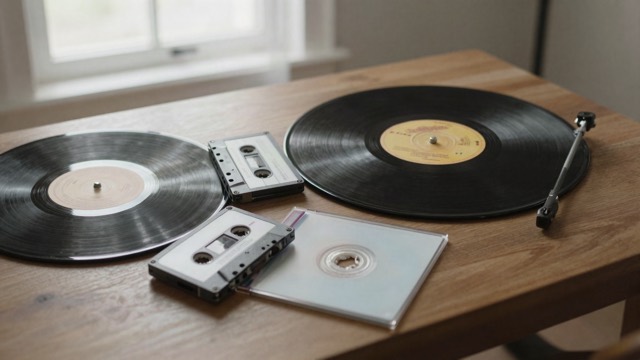
The words date from the vinyl era. A single was a small record carrying one main song, usually with another on the flip side. An LP, or long-player, held a full album. The EP, or extended play, sat in between: more than a single, less than an album.
Streaming removed the physical limits, but the terms survived because they are still useful. They signal commitment and scale to listeners, and platforms use them to decide how a release is labelled and displayed.
How platforms and distributors classify releases
There is no single legal definition. Streaming services and distributors apply their own rules, based mostly on the number of tracks and the total running time. Commonly used classifications look like this:
| Format | Typical track count | Typical total length |
|---|---|---|
| Single | 1–3 tracks | Under about 30 minutes |
| EP | Typically 4–6 tracks | Under about 30 minutes |
| Album | 7 or more tracks | Or over about 30 minutes |
These are typical rules, not universal ones. They vary between services and distributors and can change, and there are edge cases — for example, a release with very long tracks may be classed differently from what its track count suggests. Charts also have their own eligibility rules. Always check your distributor's current guidelines before you finalise a track list, because the format you choose at upload decides how the release appears.
Planning a track list? The album runtime calculator adds up your track lengths so you can see instantly whether the total sits near one of these thresholds.
The single
A single focuses attention on one song. It is the workhorse of modern music release strategy.
Strengths
- Lower cost and faster turnaround, so you can release more often.
- Clear focus for pitching, ads and short-form video — one song, one story.
- Frequent chances to be discovered, since each release is a new moment for followers and editors.
- Room to experiment with sounds, features and visuals without committing a whole project.
Weaknesses
- Hard to express a full artistic identity in one song.
- Constant release pressure can lead to burnout or rushed work.
- Listeners who love one song have nowhere to go next unless your catalogue is deep.
Singles often come with extra versions — a clean edit, a sped-up or slowed version, an acoustic take, a remix with a new feature. Some artists release these together as a small bundle; check how your distributor handles them so they stay grouped correctly.
The EP
An EP is long enough to show range but short enough to finish and promote without the weight of an album. For many independent artists it is the natural next step after a run of singles.
Strengths
- A mini body of work that introduces a sound, a theme or a new era.
- Reuses momentum: you can include one or two earlier singles alongside new songs.
- Manageable budget compared with an album.
- Press and review interest: some outlets are more likely to cover a project than a lone single.
Weaknesses
- Songs that are not the focus track can get overlooked.
- It needs a stronger concept than a random handful of tracks to feel like a real project.
The album
An album is the biggest statement an artist can make: a sustained piece of work with a sequence, a mood and a story. It carries prestige, and it gives fans a deep listen.
Strengths
- A defining artistic statement that can shape how you are seen for years.
- Deep catalogue for fans who want more, and more tracks for playlists and sync.
- A long promotional cycle built around several focus tracks, videos and live shows.
Weaknesses
- Expensive and slow to make, mix, master and promote.
- High risk if your audience is small: many tracks may go largely unheard.
- Needs a strong sequence and runtime; filler can weaken the whole record.
Sequencing and runtime
Track order shapes the listening experience: a strong opener, a pacing plan that moves between energy levels, and an ending that feels intentional. Runtime matters too. Longer is not automatically better; an album that is tight and focused often lands harder. Use the album runtime calculator to add up your track lengths and see the total before you lock the sequence.
How to choose your next format
Ask these questions honestly:
- How big is your current audience? If only a few hundred people listen regularly, singles usually build reach more efficiently than an album.
- Do the songs belong together? A project should feel like one piece of work, not a folder of demos.
- What can you afford to promote? Making the music is only half the cost. Plan the marketing budget before choosing the format.
- How long can you sustain promotion? An album needs months of content and activity; a single needs weeks.
- What is the goal? Discovery favours singles; critical attention and deeper fandom often favour EPs and albums.
Common strategies
- Single, single, single, then EP. Release two or three singles, then gather them with new songs on an EP.
- Singles into an album. Lead with several singles over months, then release the album with those songs as anchors.
- Surprise project. Works mainly for artists with an existing, engaged fan base.
- Deluxe edition. Add tracks to an existing project to extend its life.
Whatever you choose, give it a proper runway. Our guide on how to plan a music release covers the timeline, and how to distribute music explains how to deliver each format correctly.
Worked example
Suppose an emerging artist has eight finished songs. Rather than releasing all eight as an album straight away, they might:
- Release the two strongest songs as singles six weeks apart, each with its own content push.
- Watch which song performs better and which audiences respond.
- Release a five-track EP including both singles plus three new songs, checking the total runtime to make sure it is classified as intended.
- Save the remaining songs, or rework them, for a future album once the audience has grown.
This approach gives the artist several release moments, real data and a coherent project — without betting everything on one launch.
Key takeaways
- Singles, EPs and albums are defined mainly by track count and runtime, and the exact rules vary by platform and distributor.
- Typical guidelines: singles 1–3 tracks, EPs roughly 4–6 tracks, both under about 30 minutes; albums 7+ tracks or over about 30 minutes.
- Singles build reach; EPs introduce an identity; albums make a lasting statement.
- Choose based on audience size, budget, song cohesion and how long you can promote.
- Check runtimes with the album runtime calculator and confirm your distributor's rules before upload.