Creator Guide
How to Plan a Music Release: A Week-by-Week Timeline for Independent Artists
Most independent releases that disappear do so not because the music is weak, but because they arrive with no runway: no pitch, no content, no audience primed to listen. A release plan fixes that. It gives you time to deliver files properly, to pitch to playlists and press, and to build anticipation before the song is out.
This guide sets out a realistic timeline for a single, EP or album, explains what to do at each stage, and ends with a checklist you can reuse every time you put out music.
Start with the goal
Before you pick a date, decide what this release is for. The answer changes how you spend time and money.
- Growing an audience — prioritise short-form video, collaborations and playlist pitching.
- Building a live following — tie the release to shows and local DJs, radio and venues.
- Earning income — think about sync opportunities, merch and fan support alongside streams.
- Establishing a new sound or image — invest more in visuals and a clear story.
Also decide the format. A single keeps focus on one song; an EP or album gives listeners more but needs more promotion to land. If you are unsure, our guide to album vs EP vs single compares the options.
Choosing a release date
Release on a Friday
Since 2015 the music industry has used Friday as its global release day, so most new music arrives on Friday and many editorial playlists and weekly charts are built around that cycle. Unless you have a specific reason to choose another day, release on a Friday.
Avoid crowded weeks where you can
You cannot control what else comes out, but you can avoid the obvious clashes: major holidays when your audience is travelling, weeks when a huge artist in your genre is known to be releasing, and the final weeks of the year when many outlets slow down. Local context matters too — public holidays and festival seasons differ between Lagos, Accra, Johannesburg, London and Toronto.
Work backwards
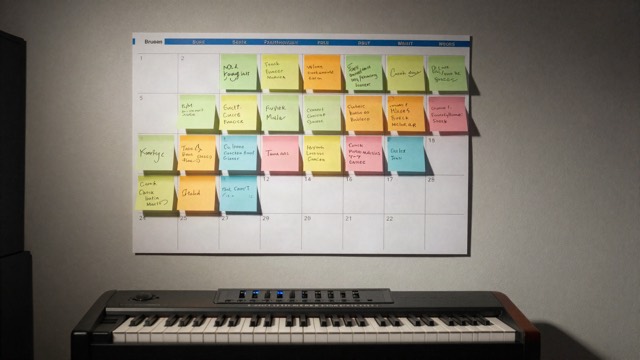
Once you have a date, count back to set every deadline. The release date planner does this for you: enter your release day and it produces a dated timeline of tasks, from finishing masters to post-release follow-up.
The release timeline
For a single, eight weeks of preparation is comfortable and twelve is better. An album benefits from three to six months. The stages below assume a single; stretch them for bigger projects.
10–12 weeks before: finish the music
- Final mix and master approved, with a clean version if needed for radio.
- Instrumental and acapella exported — useful for DJs, remixers and live shows.
- Samples cleared and features confirmed in writing.
- Ownership splits agreed and documented. Our guide on how songwriting splits work explains what to record.
8–10 weeks before: artwork and assets
- Cover artwork in the size and format your distributor requires (square, high resolution, no web addresses or unapproved logos).
- Press photos, a short biography and a one-paragraph story about the song.
- A plan for visuals: music video, visualiser, lyric video or a series of short clips.
6–8 weeks before: metadata and distribution
- Choose a distributor and prepare accurate metadata: title, artist names, featured artists, songwriters, producers, genre, language and explicit-content flag.
- Get ISRC codes for each track (many distributors issue them free) and a UPC for the release.
- Register the song with your performing rights organisation and publishing administrator if you have one.
4–6 weeks before: upload and pitch
Upload to your distributor at least four weeks ahead. This leaves time for the release to reach every platform, for any metadata issues to be fixed, and for pitching. Once the release appears in Spotify for Artists as upcoming, you can pitch one unreleased track to Spotify's editorial team. Spotify recommends pitching well ahead, and you should submit at least seven days before release so the song can appear in your followers' Release Radar. Earlier is better — pitching the moment the track is available gives editors more time. Other services have their own routes, often through your distributor.
At the same stage, send private streaming links to blogs, radio presenters, DJs and curators with a short, personal note. See our guide on how to distribute music for more on delivery and metadata.
2–4 weeks before: build anticipation
- Announce the release date and artwork.
- Launch a pre-save or pre-add link.
- Post short clips of the hook, studio footage or behind-the-scenes content regularly, not just once.
- Line up creators or dancers if short-form video is part of the plan.
Release week
- Share the song on every channel on release day, pin it on your profiles and update your links.
- Email or message your core fans directly — they are the most likely to save and share.
- Go live, perform the song, or host a listening session.
- Thank everyone who shares it, publicly where appropriate.
After release: weeks 1–8
The first week is not the whole campaign. Keep releasing content around the song — alternative versions, a performance video, a remix, fan clips — for at least six to eight weeks. Watch your analytics to see which cities, playlists and videos are driving listens, then put more effort where it is working.
Budgeting your release
Independent budgets vary enormously, from almost nothing to significant sums. What matters is spending deliberately. Common costs include mixing and mastering, artwork, video, distribution fees, paid social advertising, PR, and radio or playlist promotion from reputable services.
A useful approach is to set an overall figure you can afford to lose, then split it by priority. The music marketing budget calculator helps you allocate a total across channels and see how far it goes.
Avoid anything that sells guaranteed streams or playlist placements. Artificial streaming violates platform rules, can lead to releases being removed and royalties withheld, and teaches the algorithms nothing useful about who actually likes your music.
Content planning that actually works
Most artists underestimate how much content a release needs. Rather than one big announcement, plan a steady rhythm:
- Pick three to five angles — the hook, the story behind the song, the making of the beat, a dance or reaction, a live performance.
- Batch-produce clips in one or two sessions so you are not scrambling during release week.
- Test several hooks as short clips before release to see which part of the song people respond to.
- Repurpose each piece across TikTok, Instagram Reels, YouTube Shorts and stories.
For genre-specific tactics, our guide on how to promote an Afrobeats song goes deeper into dance challenges, DJ culture and diaspora audiences.
Common release-planning mistakes
- Uploading a few days before release. You lose pitching opportunities and risk delivery problems.
- Messy metadata. Misspelled names and missing credits can misroute royalties and split your artist profile.
- No agreement on splits. Disputes after a song gains traction are painful and expensive.
- Spending everything in week one. Keep some budget for what the data tells you after release.
- Going quiet after release day. Consistency matters more than a single spike.
Release checklist
- Goal and format decided
- Friday release date chosen, timeline created with the release date planner
- Master, clean version, instrumental and acapella exported
- Samples cleared, features confirmed, splits signed
- Artwork, photos, bio and song story ready
- Metadata checked, ISRC and UPC assigned
- Uploaded to distributor at least four weeks ahead
- Editorial pitch submitted well before release
- Pre-save live, announcement posted, content batch filmed
- Press, radio, DJ and curator outreach sent
- Budget allocated with the marketing budget calculator, with some held back
- Post-release content planned for at least six weeks
Once the music is out, understanding how it earns matters too. Our guide on how independent artists make money covers the income streams to set up alongside every release.