African Music
How to Discover New African Music Every Week
More music is released across Africa every week than anyone could listen to. Algorithms help, but they tend to recommend what you already know. A light, deliberate routine — half an hour or so a few times a week — will surface far more genuinely new artists. Here is the approach we recommend, and roughly how we work ourselves.
Start with release day
Most streaming services update their new-release sections and editorial playlists on a Friday, because that is the standard global release day for new music. That makes Friday or the weekend the natural moment to catch up. Many African artists follow the Friday convention, though some release on other days, particularly for surprise drops or to suit local promotion.
Set aside time on Friday or Saturday to go through:
- Your streaming service’s new-release playlists for Afrobeats, amapiano, African hip-hop, gospel and regional genres.
- Release radar-style personalised playlists, which pick up new songs from artists you follow.
- Artist and label pages for the acts you care about most.
If you are an artist planning your own release, our guide on how to plan a music release explains why the timing matters and how to pitch playlists ahead of time; the release date planner builds a timeline for you.
Go beyond the top playlists
The biggest editorial playlists tend to feature artists who are already established. To find newer names, dig one layer deeper:
- Country and city playlists. Many services have playlists focused on specific countries or scenes — Nigeria, Ghana, South Africa, Kenya, Tanzania, Côte d’Ivoire and more.
- Genre-specific playlists. Look for playlists dedicated to sub-genres — alté, afro-house, gqom, bongo flava, Ghanaian drill, afro-gospel — rather than broad “African hits” lists.
- Curator playlists. Independent curators, DJs and blogs often maintain playlists that move faster and take more risks than editorial lists.
Follow the credits
Credits are one of the most reliable discovery tools. When you love a song, check who produced it, who co-wrote it and who else features. Producers in particular often work with several emerging artists at once, so following a producer’s work can lead you straight to new voices. Many streaming services now show songwriter and producer credits in the app.
Features work the same way. Established stars frequently bring newer artists onto remixes and collaborations — Tems’ appearance on Wizkid’s “Essence” introduced her to a huge audience, and Burna Boy appeared on remixes of early breakthrough songs by Black Sherif and Asake. When a star features on a newer artist’s track, explore that artist’s catalogue.
Listen to radio and DJ mixes
Radio and DJ culture remain central to African music. Many stations in Lagos, Accra, Johannesburg, Nairobi and elsewhere stream online, and diaspora radio shows in London and other cities play new African music every week. DJ mixes are especially useful for amapiano and afro-house, where much of the music lives in long, continuous sets and some tracks circulate in clubs before they reach streaming services. Our explainer What is amapiano? explains why mixes matter so much in that scene.
Watch social video — carefully
Short-form video platforms are where many songs first gain momentum, often through dance challenges, lip-sync trends or fans sharing a favourite moment from a new release. They can be a great early-warning system. But be aware that a clip showcases only a few seconds of a song, and what goes viral is not always representative of an artist’s wider work. Use social video to find songs, then listen to the full release before forming a view.
Follow local scenes and live music
If you live in or visit a city with a strong African music community, live shows are the best discovery tool of all. Smaller venues, open-mic nights and showcase events often feature artists who have not yet released widely. Local music journalists, community radio and scene-specific social accounts are also excellent sources. If you cannot get to shows, recorded live sessions and performance videos on artists’ official channels are a good substitute: they reveal how an artist sounds without studio polish, which often tells you more than a single.
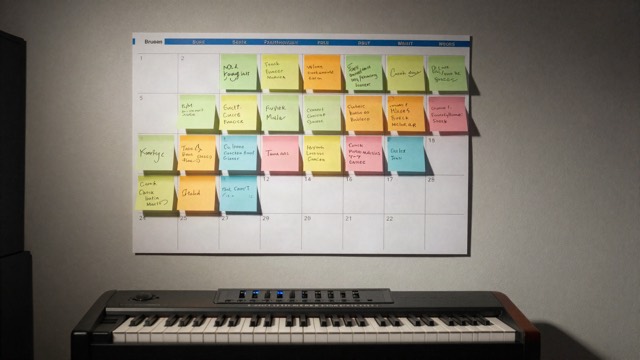
A simple weekly routine: Friday — scan new-release playlists and save anything interesting. Midweek — listen to one DJ mix or radio show from a scene you know less well. Weekend — revisit your saved songs, follow up credits, and add favourites to a personal “discoveries” playlist.
Keep track of what you find
Discovery works best when you remember what you heard. Keep a running playlist of new finds and prune it every month. Some listeners keep a simple note of artist names, producers and where they heard them. If you run a playlist for others, our playlist name generator can help you name it, and the album runtime calculator works for checking total playlist length too.
Broaden your map
Afrobeats and amapiano dominate international attention, but they are only part of the story. Make a point of exploring music from countries and genres you know less well, and go back in time as well as forward: older styles such as highlife continue to shape new music. Our listener’s guide to highlife and our feature on how African pop went global are good starting points.
A word on accuracy
When you discover a new artist, it is tempting to trust whatever you read online about them. Be cautious: fan pages, reposts and aggregators sometimes spread incorrect release dates, credits or claims. Check official artist, label and streaming pages where possible. That is also how we approach our own coverage — you can read more in how Baclivelef covers new releases.